As the years passed and JR’s works became monumental in their size, grabbing the attention of the audience and gaining international popularity and following, the artist never gave up on those initial aims of his work, the ones rooted in social consciousness and activism. Giving voice to those who were silenced by the society and making the marginalized visible again has been a continuous goal in JR’s artistic engagements. With his 28mm wide-angle lens, JR captures the intimate depths of his subjects, underlining the individuality and authenticity of each person, while having in mind universal experiences shared by all human beings. The power of JR’s art is in his ability to create in a local context while keeping a wider social agenda in mind, alluding to the universal ideals through portrayal of individual and unique subjects.
By using public art as his primary way of expression, JR counts on the participation of the audience, trying to establish a direct communication with the locals, who are often actively involved in the creation of his artworks. His ongoing efforts in bringing art closer to the people, people closer to each other, and making the world a better place have been awarded the prestigious TED Prize in 2011, granting the artist means to initiate his Inside Out project, which was one of the largest participatory public art projects in recent history. Among many JR’s endeavors that are directly advocating human rights are also those that are more personal and intimate, dealing with the questions of identity in the context of local histories. Among them, the most important one is certainly the project Wrinkles of the City.
JR "Wrinkles of the city" Westside hand code in East Berlin
Portraits of Berlin Citizens Retell City’s Tumultuous History
During his short stay in Berlin, which occurred in April 2013, JR worked on over 15 buildings in Berlin’s neighborhoods. The locations for each of JR’s paste-ups were carefully selected, usually through conversations with the portrayed Berliners and in relation to historic events that have left a personal mark on their lives. The elderly citizens of Berlin have lived through some of the most turbulent times in recent history. The memories of the iron curtain, divided country, and spirit of the regained freedom after the fall of Berlin Wall stay vivid in the eyes of the town’s elderly inhabitants. In one of the interviews, JR stated that in case of Berlin he wanted to depict “people with wrinkles on the walls with wrinkles”, alluding to the derelict and crumbling urban infrastructure inherent to many buildings abandoned after the reunification of the country.
Through citizen’s facial expressions and mindful choice of sites, JR captures the upheavals and transformations of the city, at the same time returning dignity to those elderly inhabitants who have lost their social significance in today’s Berlin. As an art hub, celebrated for its alternative lifestyles, Berlin is often perceived as a city of youth. Therefore, placing focus on the elderly in the context of the German capital is of special importance. The monumental portraits of elderly Berliners, whose personal histories are melting into the wider context of the town’s historic social changes, are there to remind younger generations of those important events that have shaped their own lives as well.
Although JR worked on more than 15 buildings in 2013, many of his works from Wrinkles of the City series have been lost, living up their fate as ephemeral works of public art and being either removed, torn or faded by the weather. However, some of them are still to be found on Berlin’s buildings and they are truly impressive works of art. For example, one of the most memorable pieces depicting a hand which gesticulates the Westside sign is still on Invalidenstrasse, as well as JR’s remarkable paste-up on the old water tower behind the Postbahnhof. And if you want to uncover stories behind these pieces, or simply enjoy them as beautiful works of art, book your street art tour next time you’re in Berlin.
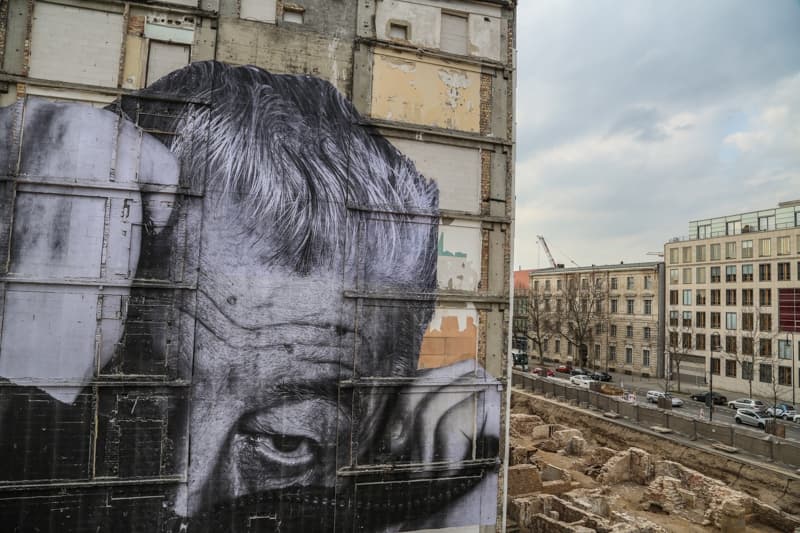
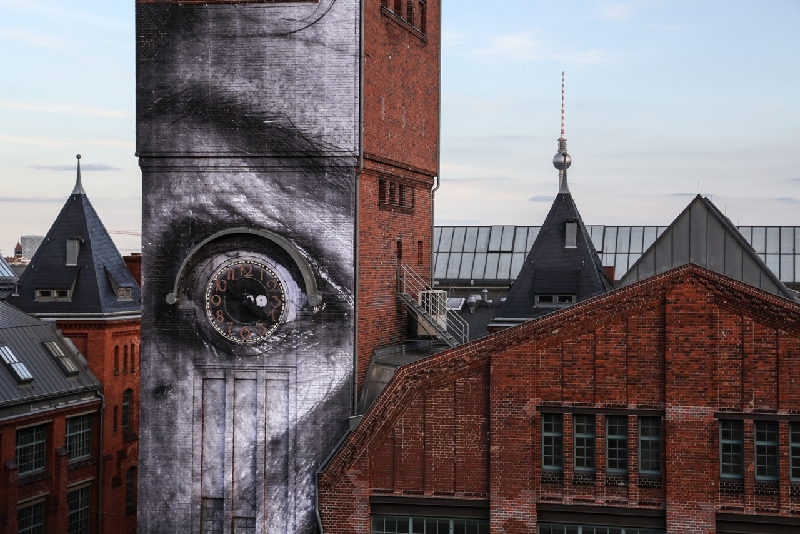 JR, Wrinkles of the City, Berlin, 2013 ©JR
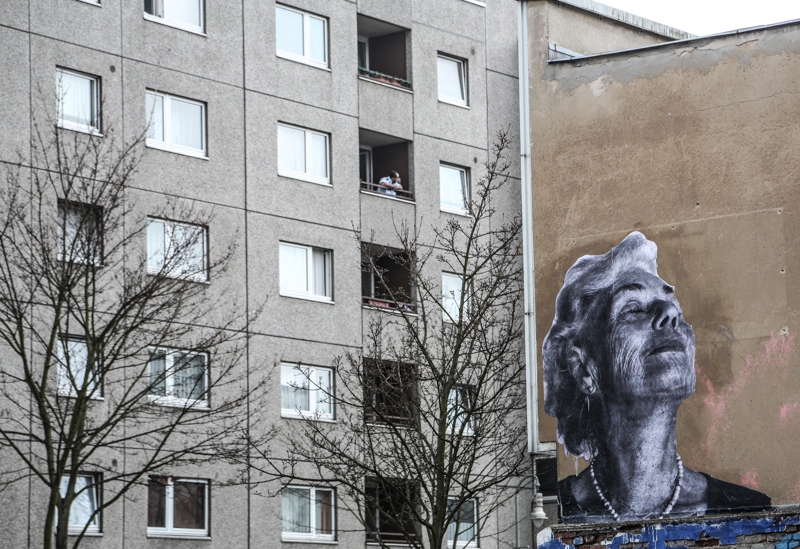 JR, Wrinkles of the City, Berlin, 2013 ©JR
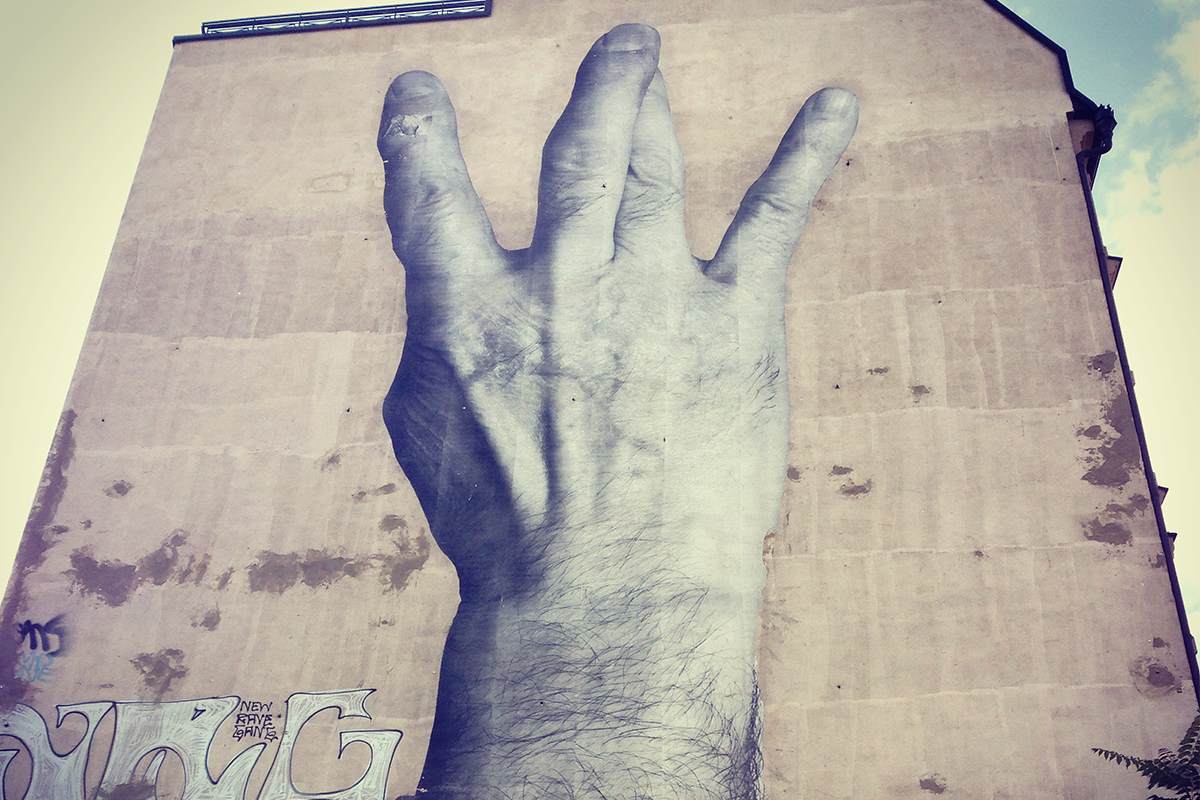 JR "Wrinkles of the city" Westside hand code in East Berlin
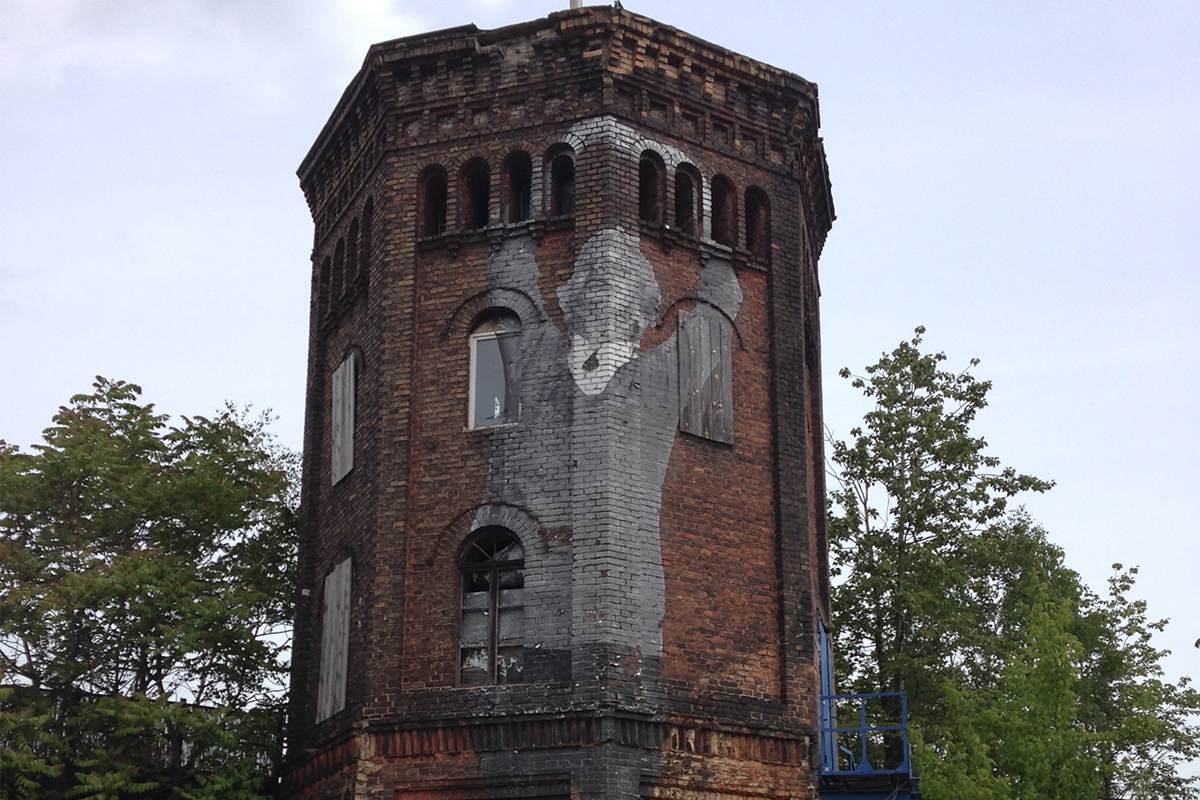 JR, Wrinkles of the City, Old water tower © BSA